
For the past few days, I've been conducting R&D around Ornith-1. For the first time, this is the first time a local model with around 35 billion parameters has felt genuinely capable of agentic work: analyzing a project, modifying files, launching commands, correcting errors and pursuing an objective over several stages.
01Where does Ornith-1 come from?
Ornith-1.0 was released in June 2026 by the DeepReinforce team. This is not a general conversational model simply labeled “coding”. The family was specifically post-trained for agentic programming tasks, using models from the Gemma 4 and Qwen 3.5 families.
What sets it apart is its training method. DeepReinforce calls this self-scaffolding: during reinforcement learning, the model not only learns to produce a solution. It also learns to improve the structure that guides the solution: search strategy, working memory, error management and tool orchestration.
To simplify, Ornith is not only trained to answer a question. It is also trained to organize how it solves the problem. This is precisely what is expected of an agent: observe, act, verify, correct and repeat until the result is achieved.
Agentic specialization
The model is designed to use tools, work in a terminal and work on code repositories.
MIT License
Checkpoints are released under an open license with no announced regional restrictions.
Local execution
The 9B and 35B variants are available in GGUF format and can run with llama.cpp or Ollama.
A high-profile release
The advertised performance, Ollama compatibility and quantized formats immediately attracted users of local models.
02Why is the model so popular?
The first thing that caught my attention was Ollama's download counter. The official page showed more than 303,000 downloads about a month after the model was made available. On Hugging Face, the combined counters displayed across the seven official repositories exceeded 11 million at the time of writing.
These figures must be interpreted with caution. A download does not necessarily represent a different person. A single user can retrieve multiple variants, and automated systems can also increase the counters.
They nevertheless show genuine interest. Ornith comes at the right time: many users are looking for a model that does not just write an isolated function, but that actually knows how to work in a project.
- a clear specialization in agentic coding;
- local variants accessible in GGUF;
- a context window announced at 256K tokens;
- an easy-to-understand MIT license;
- direct integration into Ollama;
- very high announced results for sizes 9B and 35B.
03The different variants of Ornith-1
| Model | Architecture | Officially available formats | Size shown by Ollama | Realistic use |
|---|---|---|---|---|
| Ornith-1.0-9B | Dense, around 9B | BF16 and GGUF | 5.6 GB | Local testing, code support, and machines with a reasonable amount of memory. |
| Ornith-1.0-35B | Mixture of Experts, 35B | BF16, FP8 and GGUF | 21 GB | Serious local agentic coding, provided there is enough memory for the model and its context. |
| Ornith-1.0-397B | Mixture of Experts, 397B | BF16 and FP8 | Not offered in the official Ollama library | Multi-GPU infrastructure or specialized server, well beyond a typical consumer machine. |
The size displayed by Ollama is the distributed quantized file, not the total memory required. Context, the KV cache, buffers and agent tooling add substantial memory overhead.
04The results announced by the publisher
The following results are those published by DeepReinforce. They are useful for situating the family, but they are not a substitute for independent assessments. The benchmarks also use long contexts and specific agent environments.
| Model | Terminal Bench 2.1 | SWE-bench Verified | SWE-bench Pro | NL2Repo |
|---|---|---|---|---|
| Ornith-1.0-9B | 43.1 | 69.4 | 42.9 | 27.2 |
| Ornith-1.0-35B | 64.2 | 75.6 | 50.4 | 34.6 |
| Ornith-1.0-397B | 77.5 | 82.4 | 62.2 | 48.2 |
The 35B is particularly interesting. According to the publisher's figures, it scores 64.2 on Terminal-Bench 2.1, against 52.5 for Qwen 3.6-35B. On SWE-bench Verified, the gap is smaller: 75.6 versus 73.4. This supports an important conclusion: Ornith seems especially optimized to conduct a complete agentic task, not just to generate code.
05My test environment
Home AI machine
Two 12 GB NVIDIA RTX 3060 GPUs, providing 24 GB of VRAM in total, with system RAM to absorb what does not fit on the GPUs.
MacBook Pro M4
32 GB of unified memory shared between the CPU and GPU. The model and its context have a common space, but with very little margin.
Cloud comparison
Codex with my Pro subscription and GPT-5.6 SOL, on remote infrastructure whose hardware I do not control.
My programming tests use a context of at least 64,000 tokens. This point is decisive: Ollama itself recommends a minimum of 64K for code agents. Increasing the context directly increases memory consumption.
The Ornith 35B model file distributed by Ollama is already around 21 GB. On my two RTX 3060, there is therefore not enough VRAM left to comfortably accommodate the context, the KV cache and the buffers. Part of the work overflows to RAM and the CPU, with transfers via the PCIe bus.
ollama run ornith:35b

OLLAMA_CONTEXT_LENGTH=64000 ollama serve

ollama ps

ollama launch codex06Test 1: create a Flappy Bird
My first test became a classic: asking the model to create a Flappy Bird. The game is simple to understand. A bird moves forward automatically, the player makes it rise and must avoid pipes.
This type of project is very common in public datasets, tutorials and GitHub examples. Above all, it allows you to quickly check that the agent knows how to create several files, choose a technology, launch the program and correct a possible error.
07Test 2: a C calculator on two RTX 3060 GPUs
For the second test, I deliberately chose something less conventional: a calculator developed in C, with a real graphical interface inspired by Windows 3.1.
I didn't want a Python calculator made in a few lines with a modern library. I wanted to push the model towards a more restrictive environment: window management, buttons, events, native compilation and adaptation to macOS.
It was at this moment that my hardware limitations became visible. The quantized model, 64K context, and agent data no longer fit comfortably within the 24 GB of cumulative VRAM. Ollama and llama.cpp had to distribute the load between the two GPUs and system memory.
For a non-specialist reader, the problem is simple: the model spends part of its time moving data instead of performing computations. The GPUs can no longer operate under optimal conditions and the generation rate collapses.
08The same test on a MacBook Pro M4
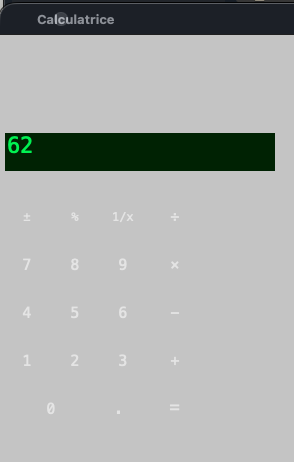
I ran the same exercise again on my MacBook Pro M4 equipped with 32 GB of unified memory. I closed all applications to free as much memory as possible for Ollama.
The Mac ran at full load for about 35 minutes, with the GPU used at 100%. The first result did display a calculator-like interface, but the buttons did not work correctly.
I explained the problems to the model. After about ten more minutes, it edited the project, recompiled the app, and got a working calculator in C on macOS.
The gain doesn't just come from eight additional gigabytes. Apple's unified memory allows the CPU and GPU to work in the same memory space. This avoids some transfers between system RAM and several dedicated graphics cards.
09Codex, Ollama and agent mode
I used two approaches to check if the orchestration tool actually changed the outcome.
The first was to launch Codex with Ollama as the local provider. Ollama now offers the ollama launch codex command, which configures Codex to use a local or remote model.
The second was through the command line experience launched from Ollama, with a real agent tool capable of reading files, modifying them, issuing commands and continuing the task. So I'm not talking about a basic chat session obtained with ollama run.
In my setup, this second approach produced the best results. It seemed to respect the model's native settings better and handle long sessions better. Codex connected to the Ollama API worked, but made less efficient use of the available context in my test.
10Comparison with GPT-5.6 SOL
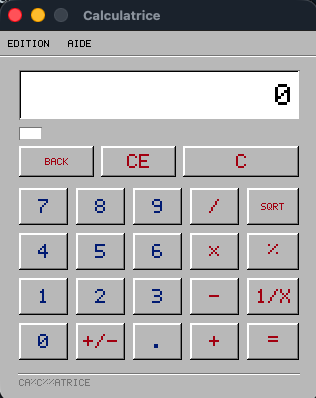
I then asked Codex, with my Pro subscription and GPT-5.6 SOL, to create the same calculator in C.
Unsurprisingly, the first result arrived much more quickly and immediately seemed more successful. The funny thing is that the model encountered exactly the same problem: the interface was displayed, but it was impossible to click on the buttons correctly.
The cloud model, however, was more precise in its diagnosis. It identified an issue with the handling of scale and coordinates on the Mac's Retina display. A second pass completed the fix.
| Configuration | Observed time | Result | Interpretation |
|---|---|---|---|
| Ornith-1 35B · 2 × RTX 3060 12 GB | More than an hour | Failure | Model and context too close to the memory limit, with a high proportion of offload to RAM and the CPU. |
| Ornith-1 35B · MacBook Pro M4 32 GB | About 45 minutes | Successful in two passes | Unified memory allows the task to be completed, but without much margin and with the GPU used to the maximum. |
| GPT-5.6 SOL · Codex Pro | About 10 minutes | Successful in two passes | Faster and more explicit in diagnosis, on a much more powerful cloud infrastructure. |
This comparison is not fair in the scientific sense: the models, infrastructure, quantization and orchestration tools are different. Above all, it measures what a user actually obtains with the means at their disposal.
11What this test actually shows
It’s a stupid test, and that’s precisely why it’s interesting. If I had asked for a Python calculator with a popular graphics library, Ornith probably would have finished in about ten minutes.
My goal was to move away from the most obvious path and place the model at the edge: C language, retro GUI, native macOS compilation, event handling and Retina scaling issue.
- a 35B model can now conduct a real local agentic task;
- the available memory is often more decisive than the theoretical number of parameters;
- a 64K context completely transforms hardware requirements;
- the agent tool and its integration count almost as much as the model;
- local remains significantly slower than a leading cloud model;
- local models are progressing quickly enough to cover new uses.
Even six months ago, I would not have imagined obtaining this type of result so easily with a local model of this size. Model size remains decisive, but training, orchestration and specialization now make it possible to do more with less hardware.
12What does this mean for businesses?
The question is no longer simply which is the best model on the market. The real question is what level of power, privacy and cost is necessary for each use.
| Use | Realistic solution | Main advantage | Main limit |
|---|---|---|---|
| Email rewriting, short summary, classification | Small local model such as Gemma, Qwen or Mistral | Data kept locally and low marginal cost | Limited reasoning about complex tasks |
| Internal assistant with documents and RAG | OpenWebUI with local model from 9B to 35B | Control over data, accounts and internal sources | Infrastructure and operations to maintain |
| Agentic coding on a real repository | Ornith-1 35B with a context of 64K or more | Code and intellectual property kept on site | High memory requirement and lower speed than the cloud |
| Very long tasks or advanced reasoning | Advanced cloud model or large capacity unified memory machine | Better quality and speed | Cost, supplier dependency and data governance |
A DGX Spark or equivalent machine has 128 GB of unified system memory. It's not 128 GB of dedicated VRAM in the classic sense, but this architecture provides enough space to locally exploit models and contexts that are impossible to fit comfortably on a 24 GB card.
There are also intermediate options. A company can turn to a French company like Mistral, whose Le Chat has become Vibe, use a European offer or deploy certain models on its own infrastructure. It can reserve the most powerful American or Chinese models for tasks that actually justify the exposure and cost.
We must therefore stop treating AI as a uniform license purchase for all employees. Companies must experiment, measure and define their own service levels.
And for that, there is no need to search on LinkedIn for a profile with an invented title who presents himself as an absolute expert in a technology that we have all been using for only a few years. You have to start by tinkering, testing, breaking, measuring and starting again. This is still the best way to understand what is really possible.
SSources and details
- DeepReinforce — official GitHub repository of Ornith-1
- DeepReinforce — presentation of the self-scaffolding method and benchmarks
- Hugging Face — official models and variants of DeepReinforce
- Ollama — official Ornith library, sizes and downloads shown
- Ollama — documentation on context size and memory consumption
- Ollama — official integration with Codex
- Ollama — overview of the ollama launch command
- NVIDIA — DGX Spark official specifications
- Mistral — presentation of the company and its deployment possibilities
Download counts, variant availability, and runtime performance can change quickly. The values presented correspond to the information visible at the time of writing.



Comments
0 commentsNo published comments yet. Be the first to respond.